
1 in 6 Households Has Past-Due Energy Bills This Winter
Winter heating costs are set to rise again — and the past-due balances are already sitting in your queue. Here's how utilities can get ahead of them before the season turns.

Key Takeaways
- Roughly 21.5 million U.S. households — about 1 in 6 — are behind on energy bills, and NEADA projects ~$25 billion in total utility debt by the end of 2026.
- The strain has climbed the income ladder: among households earning $50K–$100K, partial payments jumped from 18% to 32% and borrowing from friends or family rose from 11% to 25% in two years.
- Energy bills are rising ~3x faster than inflation while LIHEAP funding has fallen from $6.1B (2023) to ~$4B — costs up, support down.
- Moratoriums pause disconnections but don't erase balances; waiting for the winter collections push means starting several steps behind, when call volumes can spike as much as 300%.
- Proactive, behaviorally-informed engagement gets ahead of the balance — one Symend deployment cut customer service call volume 45% during heating season while improving payment-arrangement uptake.
Roughly 21.5 million U.S. households are now behind on their energy bills — about one in six — and the National Energy Assistance Directors Association (NEADA) projects total utility debt will reach approximately $25 billion by the end of 2026, per NEADA's most recent (June 2026) report. That figure isn't isolated to low-income households anymore: mid-income families are increasingly making partial payments and borrowing from friends and family just to keep the lights on.
For utility collections and customer operations leaders, this isn't a future risk to plan around. It's the account inventory sitting in the queue right now, months before the first cold snap hits. This post looks at what's driving the rise in past-due energy bills, why waiting until winter is the costliest option, and what utilities can do today to reduce disconnections without damaging customer relationships.
U.S. households — about 1 in 6 — are behind on their energy bills. NEADA projects ~$25 billion in total utility debt by the end of 2026.
Why Past-Due Energy Bills Are Piling Up Faster Than Incomes
In short: energy bills are rising roughly three times faster than overall inflation, federal assistance funding has shrunk, and the strain has moved beyond low-income households into the middle class — all of which is pushing more accounts into arrears before winter demand even begins.
A few numbers explain the pressure utilities are seeing in their own portfolios:
- The average U.S. household energy bill has climbed toward $280 a month (The Century Foundation), and NEADA estimates winter heating costs will rise another 11% this season on top of that.
- Nearly 40% of households earning under $50,000 a year report difficulty paying their energy bills — but "bill shock" is climbing the income ladder too. Among households earning $50,000–$100,000, partial payments jumped from 18% to 32% in two years, and borrowing from friends or family to cover an electric bill rose from 11% to 25% over the same period.
- Federal support is shrinking just as demand grows. LIHEAP funding has fallen from $6.1 billion in 2023 to about $4 billion for the current program year, and only a fraction of eligible households receive assistance at all.
- Utilities disconnected electric service roughly 13.5 million times in a single recent year — a number that tends to climb again once winter shut-off moratoriums lift and deferred balances suddenly come due.
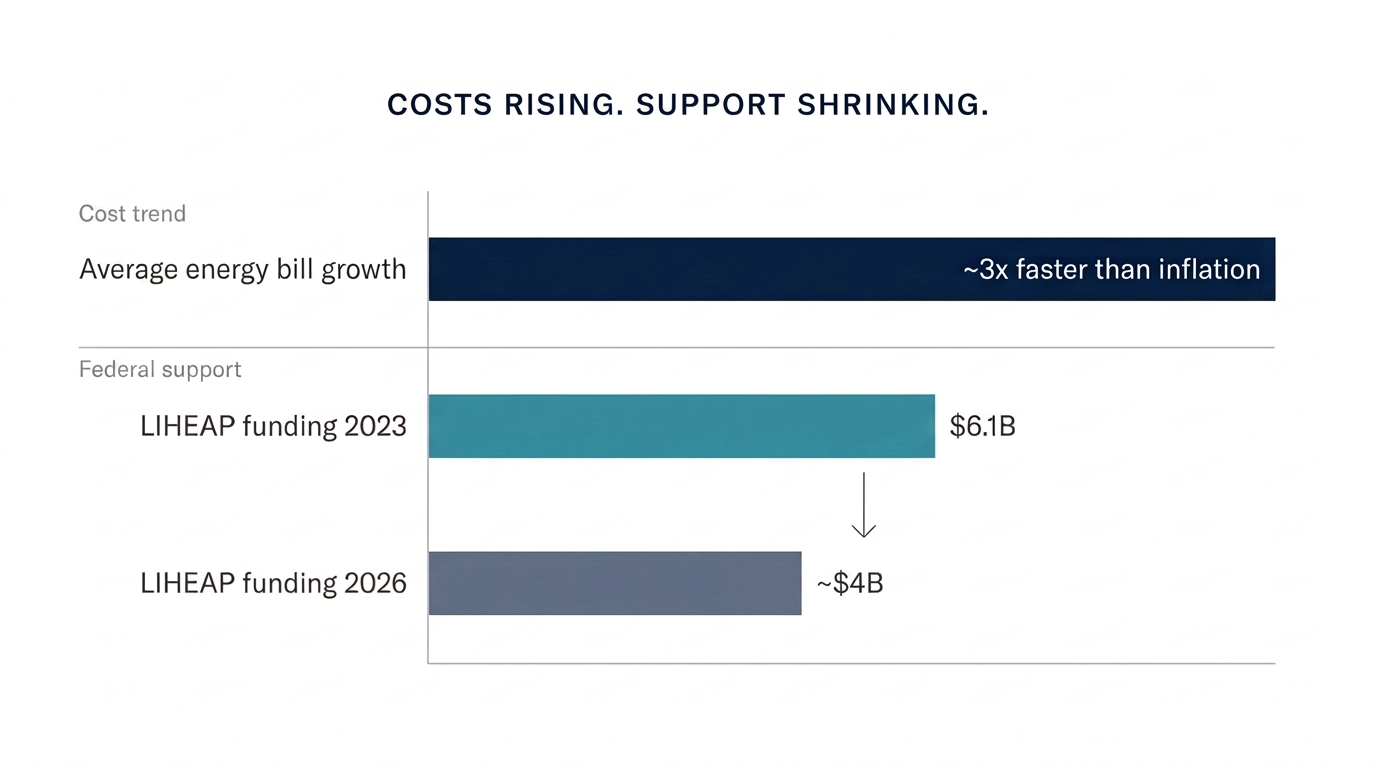
Costs rising, support shrinking: energy bills are outpacing inflation while federal LIHEAP assistance has fallen from $6.1B to ~$4B.
NEADA has flagged this dynamic repeatedly: a moratorium doesn't erase what's owed, it only pauses the disconnection. Seasonal disconnection protections don't reduce past-due balances — they just delay the collections conversation until the coldest, least forgiving time of year to have it.
"A moratorium doesn't erase what's owed — it only pauses the disconnection. Seasonal protections just move the collections conversation to the coldest, least forgiving time of year to have it."
The Cost of Waiting Until Winter
Most utilities' collections cycles are built around a predictable seasonal curve — but that curve is shifting. Rate increases, summer cooling spikes, and now compounding heating costs mean customers are entering winter already carrying balances from earlier in the year. Combined with moratorium rules that pause but don't erase past-due debt, utilities that wait for their traditional winter collections push are starting several steps behind.
The operational cost shows up fast: call volumes to collections and customer service lines have historically spiked as much as 300% during peak heating season for utilities relying on reactive, call-based outreach. That volume overwhelms contact centers right when vulnerable customers most need a fast, low-friction path to resolution — and it's also the most expensive way to collect a balance.
What Utilities Should Do Before Winter
The instinct in a rising-delinquency environment is to reach for more AI-driven prediction and automation — and that's part of the answer. But AI alone tends to optimize who to contact and when, without addressing why a customer hasn't paid or how they're likely to respond emotionally to being asked. That's where behavioral science closes the gap, and it's the difference between a collections strategy that recovers revenue and one that also protects the relationship.
- Engage before the balance escalates. Behavioral segmentation — grouping customers by capacity to pay and readiness to act rather than balance size alone — lets utilities identify at-risk customers weeks before a bill becomes seriously past-due, while a payment arrangement or budget-billing option can still prevent a disconnection notice altogether.
- Match the message to the moment. A customer who missed a payment because of a one-time cash-flow gap needs a different message than one facing sustained financial hardship. Generic, high-frequency reminders tend to push distressed customers toward avoidance; personalized, empathetic outreach — informed by where a customer sits emotionally, not just financially — consistently outperforms it. In one Symend deployment, this kind of behaviorally-tailored engagement during winter heating season cut customer service call volume by 45% while improving payment-arrangement uptake.
- Give customers a path to protection, not just repayment. Customers who have just resolved a past-due balance are up to 5x more receptive to enrolling in bill payment protection than the general customer base — a moment SymendPrevent is built to capture, offering up to six months of bill coverage in the event of job loss, illness, or disability, so a single income disruption doesn't send the same account back into arrears next season.
Build in compliance from the start, not after the fact. State PUC rules, disconnection moratoriums, and vulnerable-customer protections vary by jurisdiction and shift seasonally. Engagement strategies that bake in these rules automatically — rather than relying on manual review — reduce regulatory risk while still moving accounts toward resolution.
For utilities specifically, this combination has already shown measurable results: one large U.S. utility working through roughly $800 million in delinquent accounts saw a 5% improvement in cure rate and a projected $30 million in annual value using SymendCure's behavioral science and AI approach.
reduction in customer service call volume during winter heating season in one Symend utility deployment — alongside improved payment-arrangement uptake.
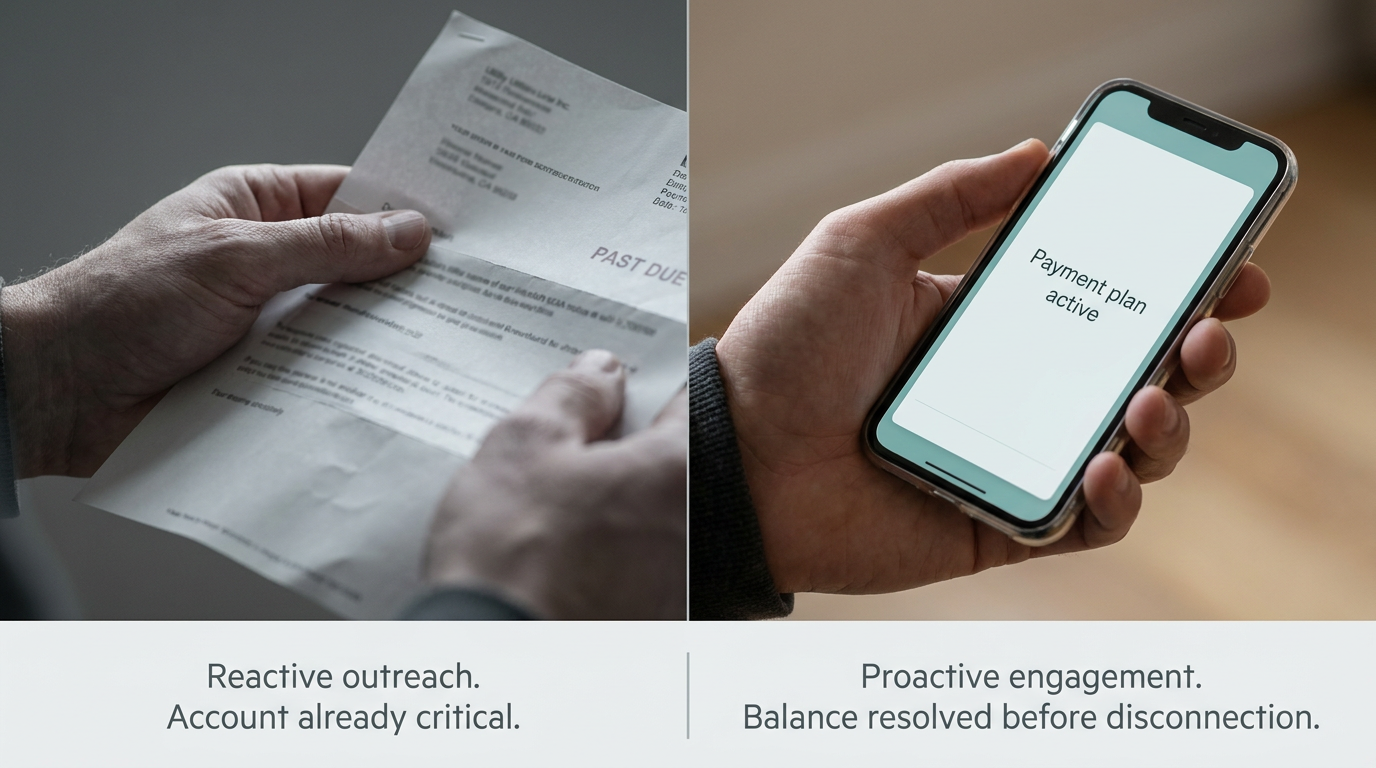
Reactive outreach reaches customers once the account is already critical. Proactive engagement resolves the balance before disconnection is ever on the table.
The Bigger Picture
Rising past-due energy bills aren't a temporary blip tied to one hot summer or one cold winter — they're the product of energy costs outpacing wages, shrinking federal assistance, and delinquency spreading into customer segments that utilities haven't historically had to manage closely. Utilities that treat this as a seasonal collections problem will keep playing catch-up. Utilities that build proactive, behaviorally-informed engagement into their utility collections strategy year-round will enter winter with fewer accounts past-due, fewer disconnections, and stronger customer relationships on the other side of it.
Get ahead of past-due energy bills before winter demand peaks
See what proactive, behaviorally-informed engagement looks like for your portfolio. Request a demo to walk through a tailored view of your cost-to-collect and disconnection risk.
UTILITIES SOLUTION REQUEST A DEMOFrequently Asked Questions
Utilities should shift from reactive, call-based collections to proactive engagement that identifies at-risk customers before balances escalate. Behavioral segmentation, personalized outreach, and self-serve payment arrangements consistently outperform generic reminder campaigns — reducing both disconnections and cost-to-collect.
Energy costs have risen roughly three times faster than overall inflation in recent years, while federal assistance programs like LIHEAP have seen funding cuts even as demand grows. The strain, once concentrated among low-income households, is now increasingly affecting middle-income customers as well.
No. Moratoriums pause disconnections during extreme weather, but the underlying balance is still owed. Customers who couldn't pay during the moratorium typically still can't pay in full once it lifts, which is why proactive engagement earlier in the season matters more than moratorium timing alone.
AI-only tools are effective at predicting who is likely to miss a payment, but they don't address why a customer hasn't paid or how they're likely to respond emotionally to outreach. Behavioral science adds that layer — tailoring tone, timing, and channel to the customer's actual situation, which is what drives higher recovery without damaging trust.
Yes. Proactive, digital-first engagement shifts volume away from expensive, reactive call center outreach. Utilities using this approach have seen up to a 45% reduction in customer service call volume during peak heating season alongside improved payment-arrangement uptake.