
25 Facts About Collections You Need to Know to Improve Payment Recovery
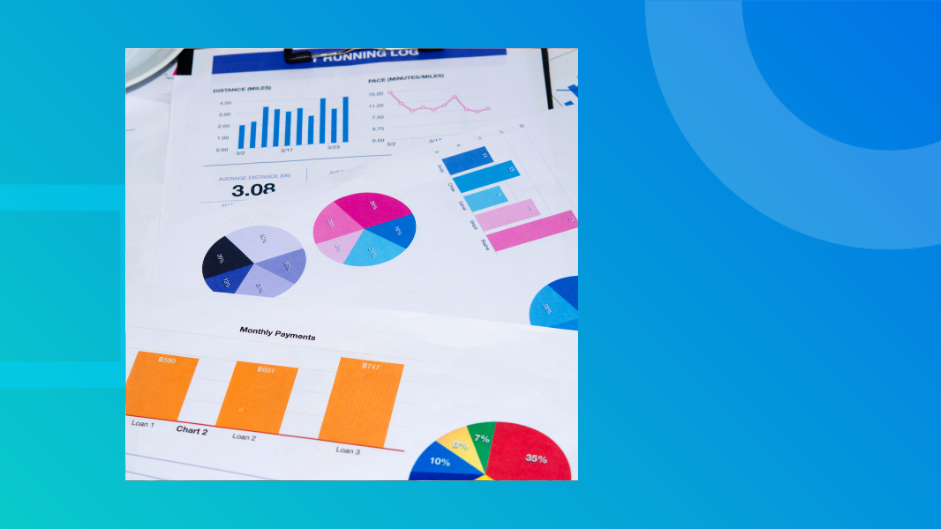
25 key facts about debt collection (updated for 2026): The research is unambiguous — traditional high-volume collections tactics are failing. 78% of outbound calls go unanswered, 71% of consumers report feeling overwhelmed by payment communications, and behaviorally designed outreach produces 133% higher payment likelihood. These 25 data-backed facts cover the psychology of delinquent customers, what behavioral science actually delivers, and how AI performs when applied with the right framework — with 2026 data where available.
The collections industry is undergoing a fundamental transformation. Traditional aggressive tactics are giving way to behavioral science-driven approaches powered by AI. But what does the research actually say? We've compiled 25 facts backed by data and behavioral science research that every collections leader needs to know.
What You'll Learn
The Psychology of Past-Due Customers
Before you can effectively recover payments, you need to understand what's really happening in your customers' minds. These facts reveal the psychological barriers standing between you and successful recovery.
Lead with empathy in every communication. Assume customers want to pay but face real barriers. Offer bill protection options before accounts become delinquent.
Quality over quantity. Use AI to determine optimal contact frequency and timing for each customer rather than batch-and-blast approaches.
Offer payment protection programs that cover bills during income disruption. Protect revenue while protecting customers.
Customers aren't ignoring you because they don't care. They're overwhelmed, stressed, and need a clear path forward.
Segment "forgetters" from customers with genuine financial constraints. Use predictive models to identify which customers just need a nudge versus those who need payment arrangements.
Train your approach around customer wellbeing. Adopt behavioral science frameworks that treat customers as partners, not adversaries.
Behavioral Science That Actually Works
Behavioral science isn't just academic theory. It's a proven toolkit for improving collections outcomes. These facts show what happens when you apply psychological principles to payment recovery. For a deep dive into the specific mechanisms, see 7 behavioral science tactics that determine whether a customer pays or ignores you.
Audit your current messaging for coercive language. Replace threats with supportive framing that helps customers see a path forward.
Review your payment pages and emails. Remove excessive options. Present two clear paths tailored to each customer's situation.
Measure customer sentiment alongside recovery rates. Both metrics matter for long-term customer lifetime value.
Organizations using behavioral science for tailored outreach report 20% higher collection rates compared to conventional methods.
Personalize beyond just inserting the customer's name. Reference their specific situation, payment history, and offer contextually relevant options.
View collections as a retention opportunity, not just recovery. Measure customer lifetime value impact, not just short-term collections.
Offer multiple payment arrangement options: partial payments, deferred dates, installment plans. Let customers choose what works for them.
Monitor agent interactions and AI-generated messages for negative tone. One bad interaction can undo weeks of engagement progress.
See Behavioral Science in Action
Learn how SymendCure applies these principles at scale to recover more payments while improving customer experience.
Explore SymendCureAI's Impact on Collections
AI is transforming collections, but not all AI is created equal. Generic AI tools often make things worse. Here's what the data shows about AI done right. For a fuller picture of what's changing, see the rise of AI in debt collections: what you need to know.
Choose AI solutions built specifically for collections with behavioral science guardrails. Generic chatbots and marketing automation tools aren't designed for this sensitive context.
Implement AI that personalizes based on Delinquency Archetypes, not just demographics. Behavioral segmentation outperforms traditional risk-based segmentation.
Move beyond risk-based segmentation to behavioral segmentation. Group customers by their capacity to pay AND readiness to act.
The question isn't whether to use AI. It's whether your AI understands the psychology of customers in financial distress.
Start with a pilot program to measure AI impact. Look for solutions that show results in weeks, not months.
Leverage predictive scoring to prioritize outreach and customize treatment strategies. Focus resources on accounts where intervention will have the most impact.
The Rise of Conversational AI
Voice and conversational AI are reshaping how collections teams engage with customers. These facts show where the industry is heading.
Evaluate conversational AI solutions that can handle collections dialogues with appropriate empathy and compliance guardrails.
Plan for voice AI integration. Consider how AI voice agents can supplement or enhance your call center operations.
Calculate your cost per call today. Model the impact of automating routine calls while reserving human agents for complex situations.
Identify your most common call types. Prioritize automating high-volume, routine interactions first for maximum impact.
74% of customers say natural-sounding AI voice bots would greatly enhance their phone interactions.
Protecting Customers Through Hardship
The best collection strategy is preventing delinquency in the first place. These facts highlight why proactive customer protection matters.
Implement proactive hardship programs that identify at-risk customers early. Offer bill protection before accounts become delinquent.
Prepare for increased delinquency volume. Invest in scalable AI-powered engagement that can handle higher volumes without proportional cost increases.
Incorporate customer tenure and history into your treatment strategies. Long-term customers deserve different approaches than new ones.
Protect Revenue Before Delinquency
SymendPrevent offers bill protection coverage that generates revenue while protecting customers during hardship.
Learn About SymendPreventProven Results & ROI
Theory is valuable, but results matter. These facts demonstrate what's possible when behavioral science and AI work together.
Calculate your potential ROI. Consider both revenue gains from improved recovery and cost savings from reduced agent interactions and call volume.
These 25 facts point to a clear conclusion: the future of collections belongs to organizations that understand customer psychology, apply behavioral science principles, and leverage AI to deliver personalized engagement at scale. The distinction between organizations that do this and those that don't isn't a matter of tactics — it's a matter of architecture.
Traditional aggressive tactics are not just ethically problematic. They're increasingly ineffective in a market where 62% of customers are living paycheck to paycheck and delinquency rates are elevated and staying there. Companies that treat customers with empathy and intelligence will win their payments and their loyalty. For evidence-based strategies that operationalize these principles, see debt collection strategies that work: a behavioral science approach.
The question isn't whether to adopt these approaches. It's how quickly you can transform your collections strategy before competitors do.
Ready to Transform Your Collections Strategy?
See how Symend has recovered over $50 billion in payments while improving customer relationships.
Request a DemoRelated Articles




Key Takeaways
- Traditional outreach isn't working: 78% of outbound calls go unanswered, yet 71% of customers feel overwhelmed by messaging volume—creating anxiety that makes payment less likely, not more.
- Choice architecture drives payment: Reducing payment options from 7 CTAs to 2 focused options produced a 133% increase in payment likelihood and a 675% increase in positive customer sentiment.
- Trust and flexibility are the levers: 82% of customers trust supportive, behavioral science-led approaches; 69% prioritize flexible payment options; and 42% forget to pay bills simply due to overwhelm—not unwillingness.
- Measurable outcomes: Organizations implementing behavioral science deliver 10x ROI through 10%+ recovery rate increases and 50% operational cost reduction—across 250M+ delinquencies and $50B+ in recovered balances.
- The methodology behind the results: Behavioral science defines the variables, data science defines the methodology, and the platform executes. Proprietary Delinquency Archetypes decode each customer's capacity to pay and readiness to act, delivering empathetic, personalized outreach that resolves accounts and preserves the relationship.
Frequently Asked Questions
Symend is a next-gen engagement platform transforming enterprise collections with the power of AI and Behavioral Science. Symend predicts a customer's behavior based on Delinquency Archetypes and generates AI-optimized, hyper-personalized engagement journeys that break through the noise. With over 9 years of experience treating over 250 million delinquencies and over $50 billion in recoveries, Symend delivers up to 10% higher recovery rates, 50% reduction in OpEx costs and 10x ROI while strengthening customer relationships for enterprise telecommunications, financial services, and utilities companies.
Symend serves innovative finance and collections leaders at enterprise telecommunications, financial services, and utilities companies managing high-volume delinquent accounts. The platform helps organizations looking to improve recovery rates, reduce operational costs, and enhance customer trust. With over 9 years treating over 250 million delinquencies and over $50 billion in recoveries, Symend delivers proven results including up to a 10% increase in recovery rates, 50% reduction in OpEx costs, and 10x ROI.
Traditional collections systems are static, inflexible, and treat all customers the same. Symend's single interconnected platform shifts from demanding payment to understanding each customer's unique situation—whether they forgot, are having a tough month, or feel overwhelmed. Symend combines AI and behavioral science, empowering customers to self-cure by offering payment options like autopay and payment arrangements, nurturing each customer based on their unique engagement patterns and dynamically optimizes at four levels for unmatched sophistication and ROI.
Symend's AI determines each customer's journey informed by behavioral insights and Delinquency Archetypes. The platform generates hyper-personalized engagement through email, text, IVR and letter delivery with embedded behavioral science tactics. Symend empowers customers to self-cure by offering payment options like autopay and payment arrangements, nurturing each customer based on their unique engagement patterns and dynamically optimizes at four levels for unmatched sophistication and ROI.
Yes, Symend integrates seamlessly with existing collections systems and standard operating procedures. Symend can seamlessly ingest existing data sources such as CRMs, risk scoring, dialler files, and core banking systems through robust APIs and pre-built connectors. Symend offers full orchestration and execution of email, text, IVR and letter delivery through the platform or leverage a client's in-house tools.
With over 9 years of experience treating over 250 million delinquencies and over $50 billion in recoveries, Symend optimizes at four levels: scoring customers based on predicted behavior using Delinquency Archetypes, real-time re-scoring and re-segmentation throughout journeys, optimizing engagement at the individual message level, and iterating at the journey level to converge on highest-converting strategies. This AI and behavioral science approach delivers up to 10% higher recovery rates.
Symend delivers 10x ROI through multiple value streams: up to 10% higher recovery rates, 85% reduction in agent interactions and call volume reduces OpEx costs by 50%, decreased text/email/letter costs, improved write-off rates, and reduced third-party fees. With over $50 billion in proven recoveries across over 250 million delinquencies, Symend clients see millions in additional recovered revenue while strengthening customer relationships.
Symend starts with a 90-day pilot that can be implemented in weeks, not months, depending on client readiness. The AI model begins training after the first 24 hours of customer data ingestion, with cohort performance reviews conducted at 40-day and 80-day intervals. Upon pilot completion, clients receive a full analysis, breakdown of monetary impact, and next steps to ramp up to production volume. Continuous optimization ensures ongoing improvements that accelerate time-to-value.
Symend employs an enterprise-level data security framework that includes data minimization, anonymization, and encryption techniques to protect sensitive information. The platform is supported by extensive cybersecurity measures built into its Microsoft Azure infrastructure, including advanced endpoint protection, intrusion detection systems, and compliance with industry standards including SOC 2, GDPR, ISO, and CCPA ensuring client data remains secure and private throughout all processes.
Recovery rates plateau below 25% because most collections programs reach the same customers in the same way — increasing outreach volume without changing the approach. The customers who haven't paid after initial contact haven't done so because the engagement doesn't match their situation. Behavioral research shows delinquent customers fall into distinct profiles: some need a simple reminder, some need flexible payment options, some feel overwhelmed and need a low-friction path to engage. Uniform contact sequences — same message, same timing, same channel for everyone — capture the easiest-to-recover accounts early, then stagnate. Closing the gap above 25% requires behavioral segmentation that classifies customers by payment readiness and tailors outreach accordingly. Organizations that implement behaviorally segmented engagement report recovery improvements of up to 10% above their previous baseline.
Ignoring a reminder isn't the same as ignoring a debt. Research on consumer payment behavior shows that most customers in early-stage delinquency intend to pay — they're just experiencing some combination of forgetfulness, friction, and cognitive overload. The reminder arrives, but there's no immediate action link, or the payment portal requires a login the customer doesn't remember, or the message doesn't clearly explain their options. Behavioral economics calls this the intention-action gap — the space between meaning to do something and actually doing it. Collections programs with low response rates to reminders typically have high friction in the payment process, generic messaging that doesn't acknowledge the customer's specific situation, and no flexible options that give customers who can't pay in full a path forward. Reducing the gap requires simpler, more direct engagement with embedded payment actions and options that match real customer circumstances.